Among Morocco’s sun-drenched landscapes and ancient medinas lies a powerful, lesser-known story—one of tradition, empowerment, and sustainable tourism. Visiting an argan oil women’s cooperative Morocco is more than just a stop to buy souvenirs; it’s a window into a centuries-old craft preserved by Amazigh (Berber) women and a testament to how community-driven enterprises are shaping modern Morocco.
In this guide, we’ll explore the magic behind Morocco’s “liquid gold,” the cultural importance of women-led cooperatives, and why this experience should top your travel list.
The Heart of Argan Country: A Cultural and Economic Lifeline
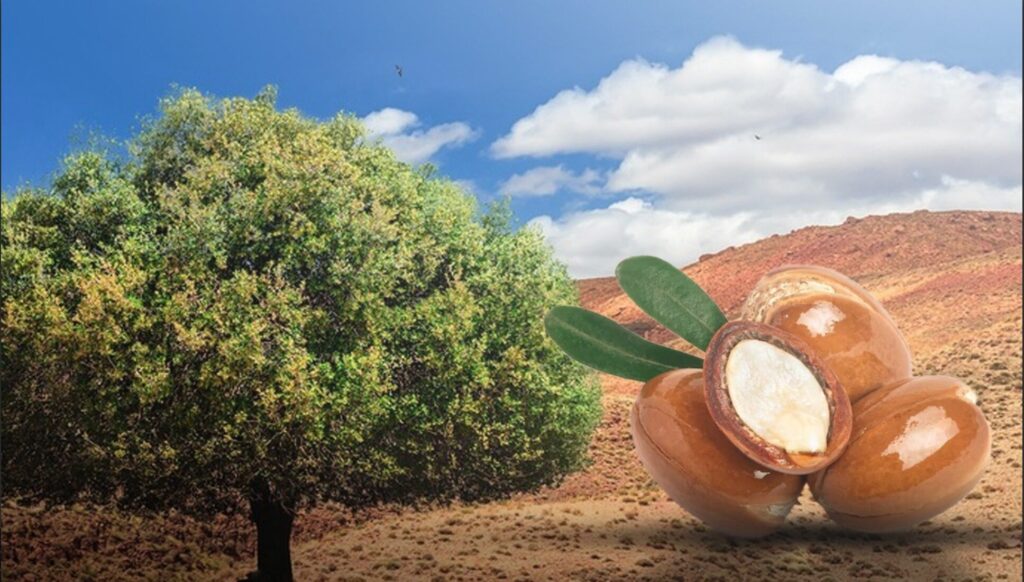
The argan tree grows almost exclusively in Morocco, especially in the Souss Valley and along the Atlantic coast, between Essaouira and Agadir. Declared a UNESCO Biosphere Reserve in 1998, this region is home to many women’s cooperatives dedicated to the traditional production of argan oil—by hand.
These cooperatives are more than just workshops—they are community spaces where women gain financial independence, preserve ancestral knowledge, and contribute meaningfully to local economies.
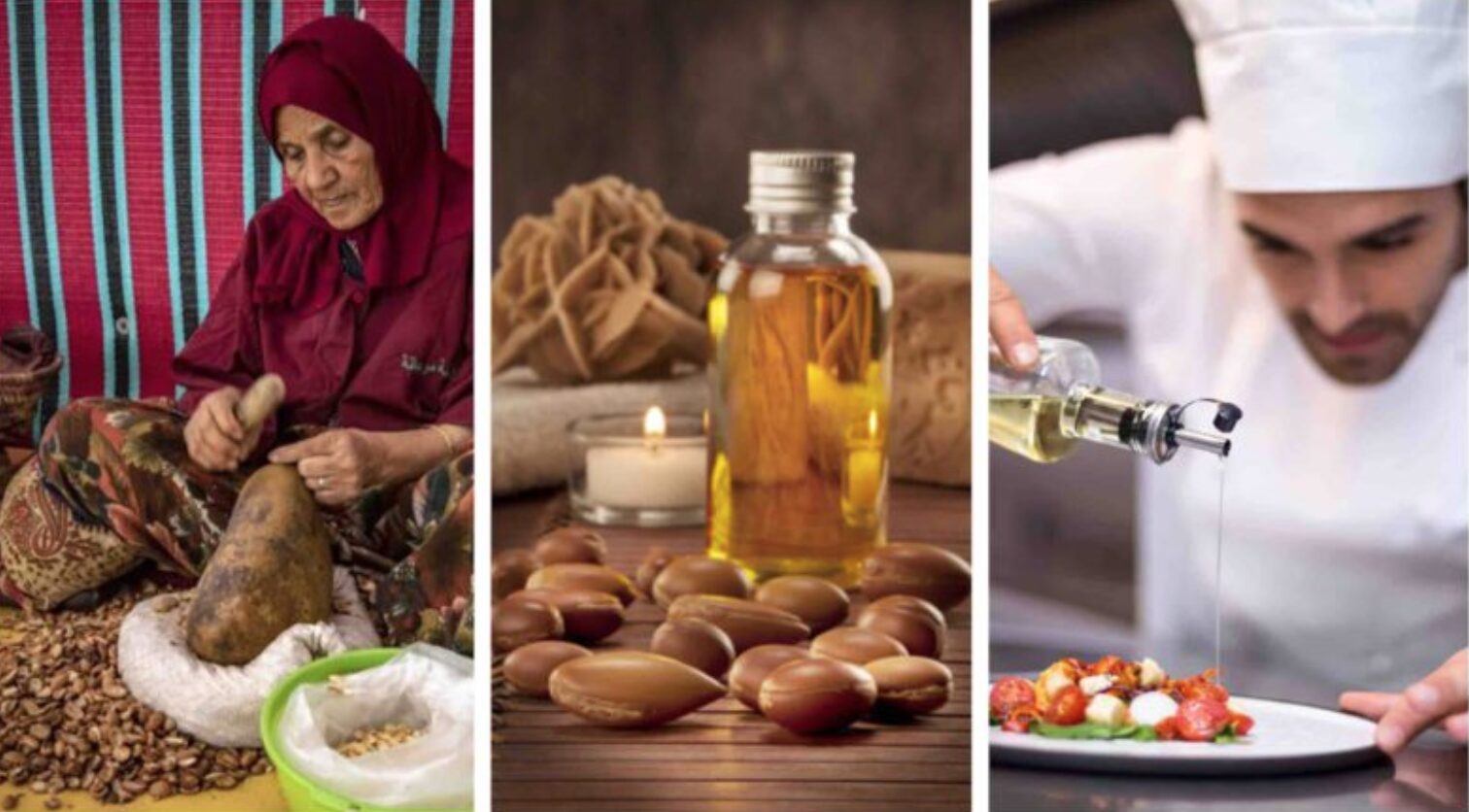
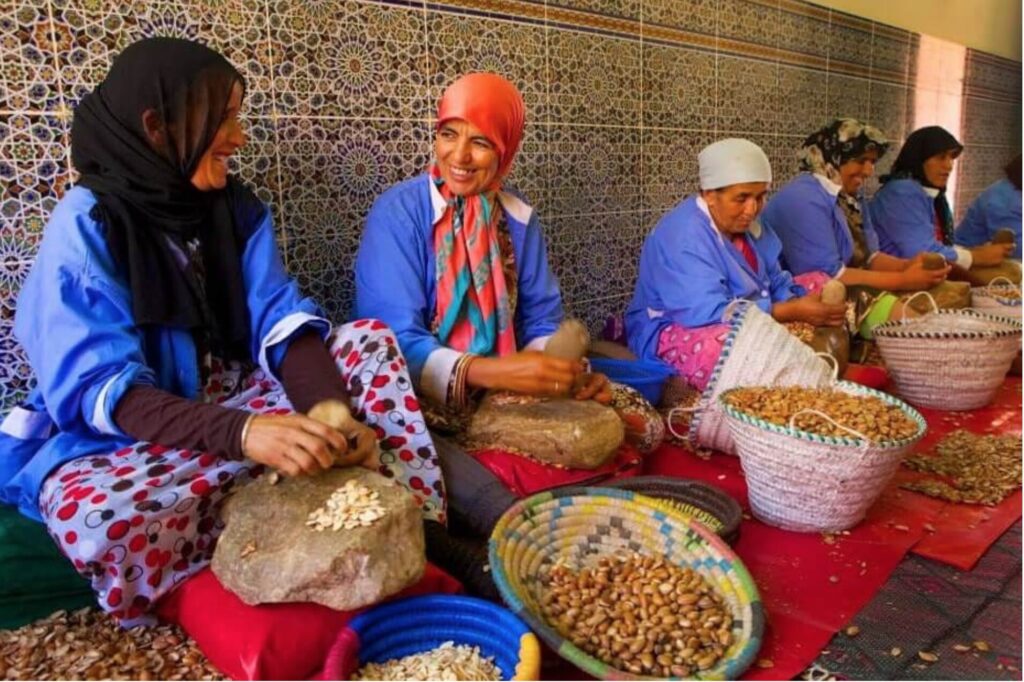
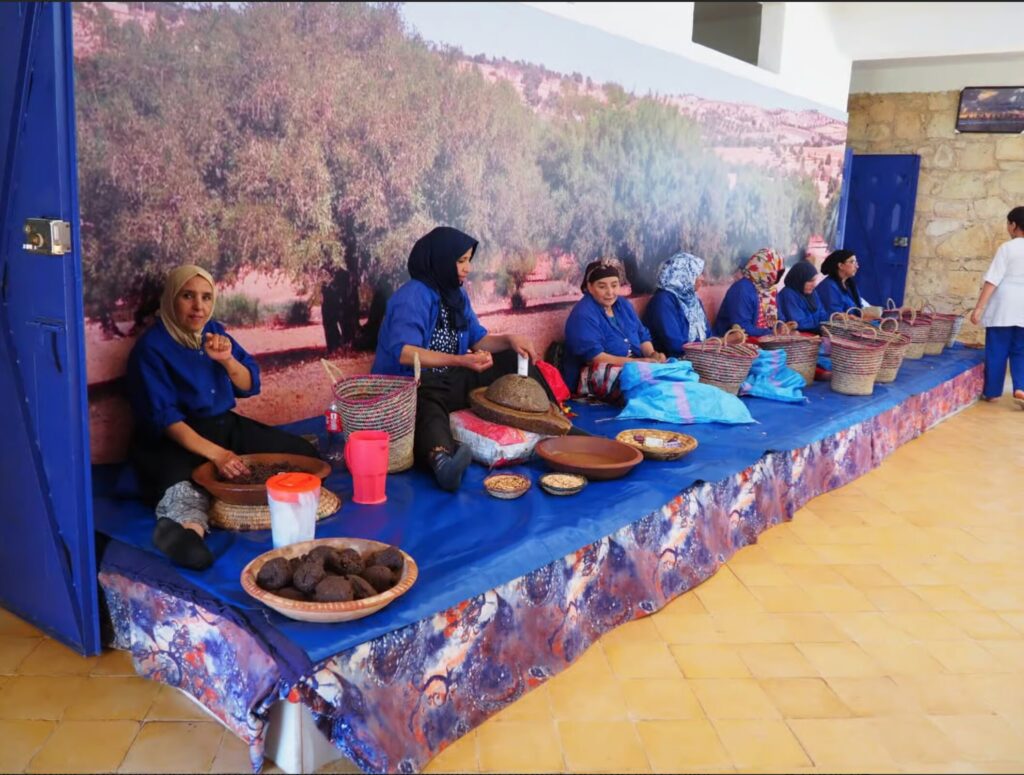
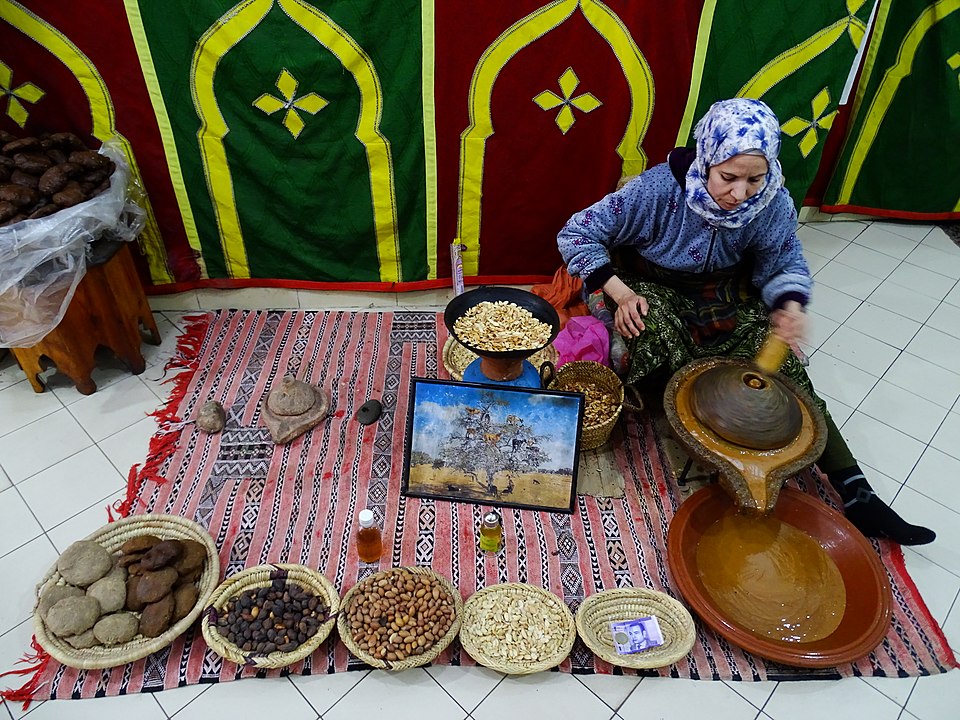
When you visit an argan oil women’s cooperative in Morocco, you’ll witness how ancient techniques—like hand-cracking argan nuts between stones—have been passed down through generations. You’ll also discover how these organizations uplift women, allowing them to earn fair wages, access education, and improve their families’ lives.
Must-See Experiences at a Women’s Argan Cooperative
1. Hands-On Demonstrations
One of the most engaging parts of visiting a cooperative is watching the oil-making process from start to finish. You’ll see women cracking nuts, grinding kernels, and producing both culinary and cosmetic oils—all without machines. Some cooperatives even let you try the steps yourself.
2. Taste and Try
Many cooperatives offer tastings of culinary argan oil, often paired with fresh bread, honey, and amlou—a delicious spread made from almonds, argan oil, and honey. For beauty lovers, there’s an opportunity to test argan-based products like creams, soaps, and hair treatments.
3. Ethical Shopping
By purchasing directly from a certified cooperative, you ensure your money supports fair wages, sustainable practices, and local families. Look for cooperatives with EcoCert or Fair Trade labels, which guarantee ethical standards.
4. Meet the Women Behind the Craft
One of the most touching aspects of the visit is getting to know the women themselves. Many are proud to share their stories of personal transformation through the cooperative. A translator or guide can help bridge any language gaps.
Travel Tips & Cultural Insights
Where to Go
Some of the best argan oil women’s cooperatives are located along the road from Marrakesh to Essaouira, a route that’s popular among travelers and rich with scenic beauty. Towns like Tamraght, Smimou, and Tidzi have well-established, visitor-friendly cooperatives.
Timing Your Visit
Cooperatives are open year-round, but for the most active production experience, visit between May and August, when argan nuts are harvested and processed.
What to Wear
You don’t need anything special—just comfortable clothes suitable for travel and respectful of local customs. Covered shoulders and knees are recommended in rural areas.
Language and Communication
Most women speak Amazigh or Moroccan Arabic. French is commonly used in signage and explanations, and some cooperatives offer guides who speak English.
Tour or Independent Visit?
You can visit many cooperatives independently, especially if you’re driving. However, joining a guided tour from Marrakesh or Essaouira often includes added context, storytelling, and translation.
Real Traveler Story: Learning Through Experience
Amira from Canada shares:
“During my trip to Essaouira, our driver suggested we stop by a women’s argan oil cooperative near Smimou. I had no idea what to expect, but I was blown away. Watching the women work with such skill and care—and then hearing how the cooperative helped one woman send all her kids to school—moved me to tears. I bought some oil, of course, but the real gift was the connection. It was a highlight of my trip.”
Stories like Amira’s are common. These visits create lasting memories and offer travelers a more meaningful experience than just sightseeing.
Planning Ahead: When and Why to Visit a Cooperative
Why This Experience Matters
In recent decades, Moroccan women—particularly in rural areas—have faced limited economic opportunities. These cooperatives are changing that by providing education, healthcare access, and a voice within their communities.
By visiting and supporting an argan oil women’s cooperative Morocco, you’re not just witnessing tradition—you’re actively participating in a more inclusive and sustainable tourism model.
Seasonal Highlights
- Spring (March–May): Wildflowers bloom, and the landscape is lush—perfect for photos.
- Summer (June–August): Peak harvest time for argan nuts. Expect a buzz of activity in the cooperatives.
- Fall (September–November): Quieter, with warm weather and fewer tourists—ideal for more personal experiences.
FAQ – Argan Oil Women’s Cooperatives in Morocco
What is the difference between cosmetic and culinary argan oil?
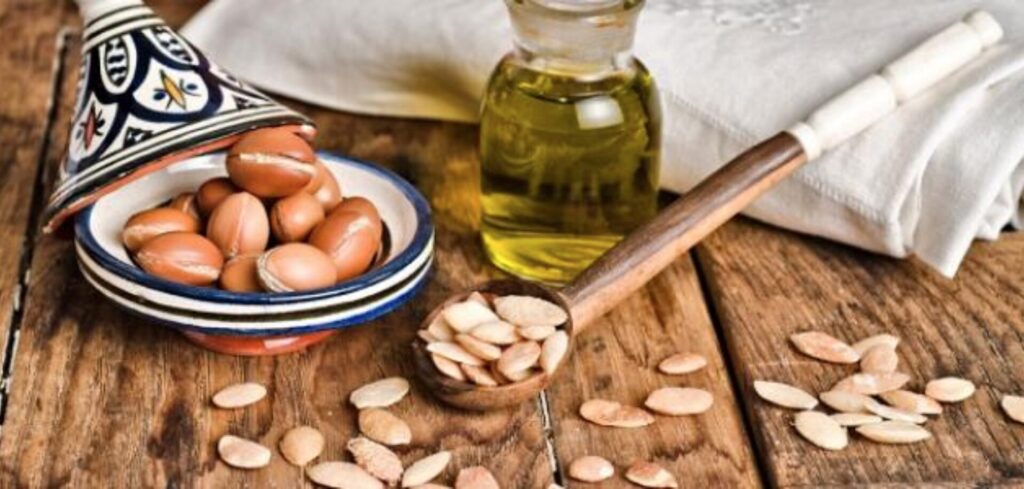
Culinary argan oil is roasted and used for cooking, offering a nutty flavor. Cosmetic argan oil is cold-pressed and used for skincare and haircare due to its high vitamin E content.
Are all argan cooperatives in Morocco women-run?
Most traditional cooperatives are women-led, particularly those focused on social empowerment. However, not all are. Look for official certifications to ensure authenticity and ethical practices.
Can I buy products directly at the cooperative?
Yes! In fact, it’s encouraged. Buying directly ensures fair payment to the women and often gets you fresher, higher-quality products than what’s sold in city shops.
Do I need to book in advance to visit a cooperative?
Most cooperatives welcome walk-ins, especially those near tourist routes. However, if you’re part of a tour group or want a guided experience, it’s best to arrange ahead.
Is argan oil production sustainable?
Yes. Argan trees are protected under UNESCO, and cooperatives use traditional, low-impact methods. Buying from reputable sources supports ecological preservation and local economies.
Conclusion: A Journey That Gives Back
Travel has the power to connect us to people, culture, and purpose. Visiting an argan oil women’s cooperative in Morocco does exactly that. It’s not just about oil—it’s about women reclaiming their narratives, preserving tradition, and sharing their craft with the world.
As you plan your Moroccan adventure, carve out time for this enriching stop. Whether you’re driving to the coast, joining a group tour, or seeking authentic souvenirs, you’ll leave with more than just silky skin—you’ll take home a story worth sharing.
Want to learn more about Moroccan culture and experiences?
Explore more guides on Skies of Morocco, connect with local hosts, or book your next meaningful travel experience today.