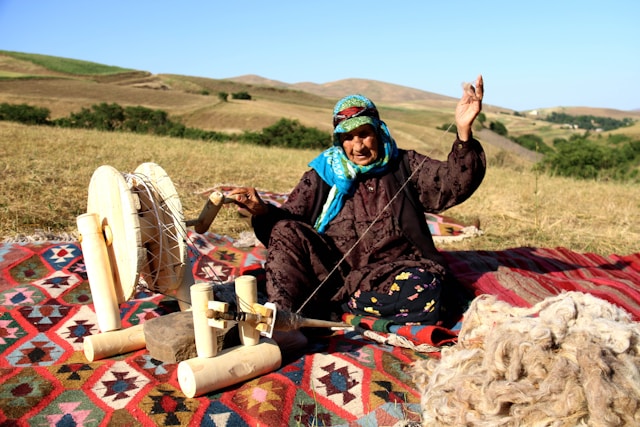
In every corner of Morocco’s countryside, artistry blooms in the hands of resilient women who transform local resources into timeless beauty. Moroccan Rural Women and Handicrafts is more than a cultural phenomenon—it’s a story of identity, empowerment, and deeply rooted traditions that have shaped villages for centuries. Travelers who explore beyond the well-known imperial cities often find that rural Morocco offers a profound and authentic connection to the country’s soul through its crafts, cooperatives, and warm hospitality.
In this travel guide, we’ll journey into the world of Moroccan rural artisans, discover must-see craft villages, learn about local traditions, and gather tips to connect meaningfully with these communities.
1. Understanding Moroccan Rural Women and Handicrafts
The Heartbeat of Rural Moroccan Culture
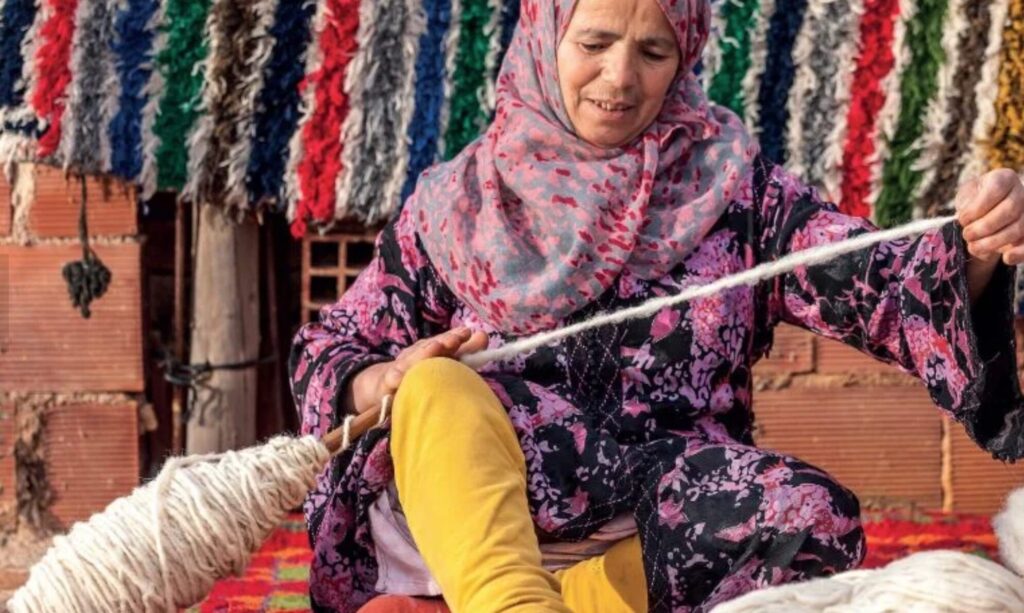
Craftsmanship is at the center of rural life. Women work with natural materials—wool, clay, palm leaves, and argan nuts—to create objects that hold both utility and beauty. From colorful carpets to handwoven baskets, everything they produce tells a story of patience, skill, and heritage.
A Role Rooted in History
Handicrafts have existed in Morocco for thousands of years, influenced by Amazigh (Berber), Arab, Andalusian, and Saharan cultures. These crafts are especially prominent in rural areas, where traditions are passed down from mothers to daughters in communal settings.
For deeper historical background on Morocco’s regions, you may explore Marrakech or the country’s Amazigh culture.
2. Must-See Craft Destinations and Experiences
Visiting Women’s Cooperatives
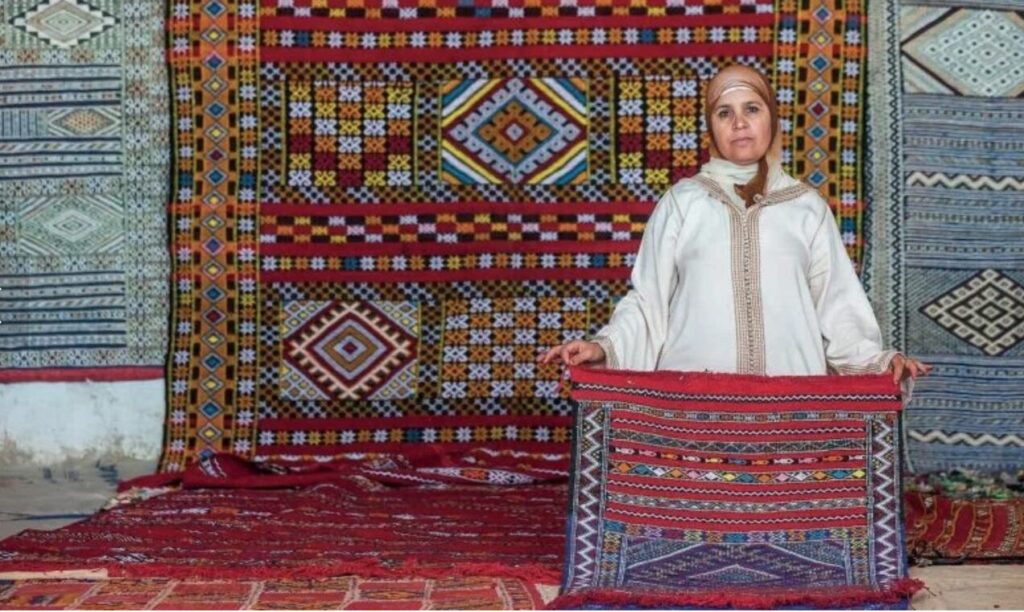
Women’s cooperatives have become essential for economic empowerment in rural Morocco. Visiting a cooperative allows travelers to witness the craft-making process and support artisans directly.
Argan Oil Cooperatives – Souss-Massa
In the region of Agadir and Essaouira, argan oil cooperatives provide a window into the labor-intensive process carried out entirely by women—cracking nuts, grinding kernels, and processing the precious golden oil.
Carpet-Weaving Villages – Middle Atlas
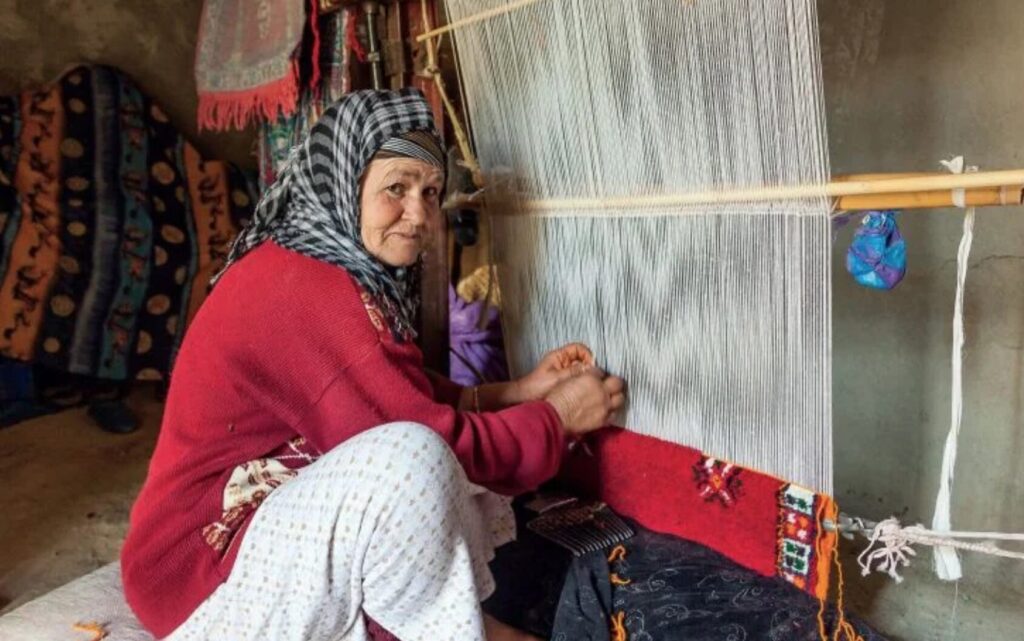
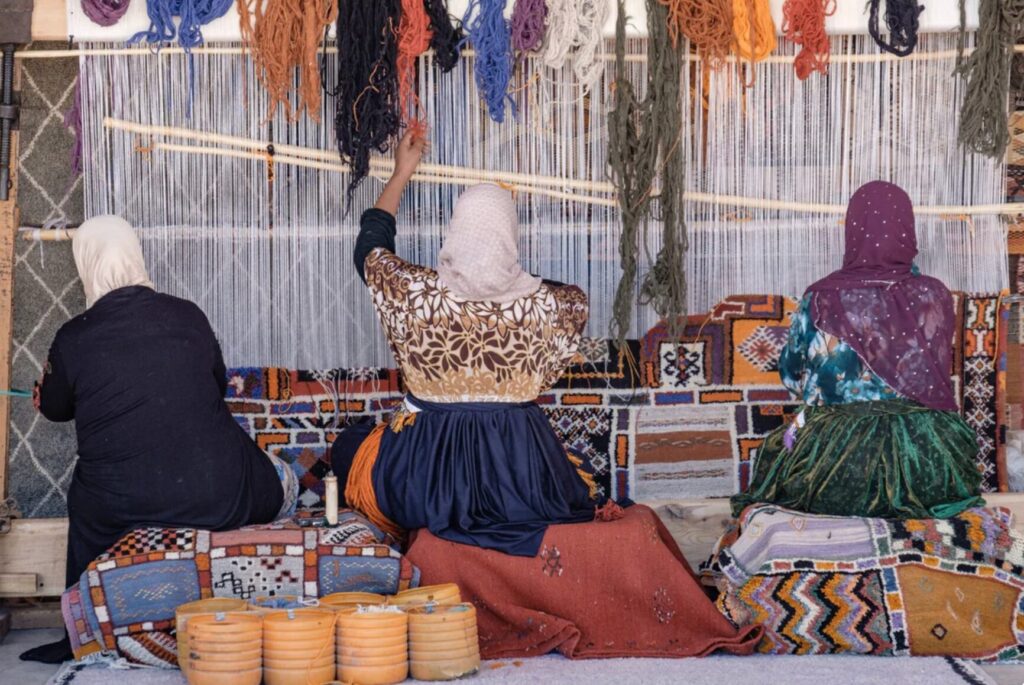
Regions like Azrou, Khenifra, and Beni Mellal are famous for vibrant Amazigh carpets. Travelers can watch weavers at their looms, dyeing wool with natural pigments and hand-tying patterns that reflect tribal identity.
Basketry in the Rif Mountains
The Rif region (Chefchaouen, Ouezzane, Tetouan) is known for stunning basketry made from palm leaves and esparto grass. The designs are often bright, geometric, and distinct to each village.
Pottery Villages – Tamegroute & Safi
Tamegroute’s iconic green pottery and Safi’s traditional workshops give travelers a chance to observe clay shaping, firing techniques, and glazing traditions.
3. Travel Tips and Cultural Insights
✔ Support Ethical and Fair-Trade Cooperatives
Choose cooperatives that ensure women receive fair compensation and work in safe environments. This helps sustain their independence and preserves traditional craftsmanship.
✔ Learn Basic Amazigh or Darija Phrases
A simple “tanmirt” (thank you in Tamazight) or “shukran” (thank you in Darija) goes a long way in building friendly relationships and showing respect.
✔ Ask Before Photographing
Many rural women prefer privacy. Always ask permission before taking photos inside workshops or homes.
✔ Cash is King
Most rural markets and cooperatives do not accept cards. Bring small bills for purchasing crafts or tipping artisans.
✔ Avoid Bargaining Excessively
Reasonable negotiation is part of Moroccan culture, but cooperatives have fixed prices, and artisans depend heavily on their craft for living.
4. Traveler Stories and Real-World Experiences
A Glimpse into a Carpet Weaver’s Life
Travelers often speak of meeting Amina, a weaver from Khenifra who has been crafting traditional Zayane carpets for over 30 years. She shares stories of weaving with her mother under the shade of walnut trees, using wool from local sheep, dyed with henna, saffron, and pomegranate rinds.
Visitors say watching her hands move over the loom is like witnessing history come alive. Her rugs are not just textiles—they are expressions of memory, resilience, and cultural pride.
Journey Through an Argan Cooperative
Tourists in Essaouira often recall the rhythmic sound of women cracking argan nuts by hand during a tour of a small family cooperative. The experience is not just educational but deeply inspiring, as the work symbolizes the empowerment and financial independence gained through centuries-old knowledge.
Meeting Basket Weavers in Chefchaouen
In the blue city’s surrounding villages, visitors have the chance to sit with elderly women weaving baskets while recounting local stories and folklore. For many travelers, these simple moments become the highlight of their Moroccan journey.
5. Future Travel Recommendations and Seasonal Insights
Best Time to Visit Rural Craft Regions
- Spring (March–May): Ideal temperatures and vibrant landscapes.
- Autumn (September–November): Pleasant weather and active craft production after summer harvests.
- Winter: Great for weaving regions, as carpet crafting is most active during colder months.
Upcoming Cultural Festivals
Travelers looking for deeper immersion may plan trips around:
- Imilchil Marriage Festival – featuring traditional attire and handmade crafts.
- Sefrou Cherry Festival – includes local artisans showcasing their work.
- Tan-Tan Moussem – celebrating Saharan traditions and handicrafts.
Eco-Tourism and Village Homestays
Morocco is increasingly promoting sustainable tourism. Staying with local families or booking eco-lodges near craft villages offers authentic experiences while supporting rural communities.
FAQ – Moroccan Rural Women and Handicrafts
What types of crafts are rural Moroccan women most known for?
Carpet weaving, basketry, pottery, natural dyeing, leatherwork, and producing argan or olive oils.
Can visitors participate in craft workshops?
Yes! Many cooperatives offer short workshops where travelers can learn weaving, pottery, or basket-making.
Are the products sold in cooperatives authentic and handmade?
Absolutely. Unlike urban souks, rural cooperatives produce items entirely by hand using traditional tools and local materials.
Is it possible to ship purchased crafts internationally?
Yes. Many cooperatives now partner with shipping services, especially in regions like Essaouira and Marrakech.
How can travelers support rural women through tourism?
Buy directly from cooperatives, respect cultural norms, tip artisans, and share their work on social media to help promote their craft.
Conclusion
Moroccan Rural Women and Handicrafts represent the soul of Morocco—creative, resilient, rooted in tradition, and full of heart. Exploring rural craft villages offers travelers an unforgettable cultural immersion while supporting communities that depend on artisanal work for their livelihoods.
Whether you dream of learning how to weave a carpet, discovering the secrets of argan oil, or simply connecting with warm and welcoming women across the countryside, rural Morocco invites you to slow down, listen, and appreciate the beauty of handmade heritage.
Ready to experience it yourself?
Start planning your trip, explore more guides on skiesofmorocco and discover the hidden stories that make Morocco truly extraordinary.