Across the rugged mountains, golden dunes, and ancient kasbahs of Morocco, an ancient language still speaks — not through words, but through symbols. The Amazigh Symbols: Language of the Ancestors tells the story of a people who carved their identity into the stones, textiles, and jewelry of North Africa long before written alphabets took hold.
For travelers seeking to understand Morocco beyond its colors and flavors, Amazigh symbols offer a deeper journey — one that connects you to the country’s oldest roots. These timeless patterns represent protection, fertility, freedom, and nature, forming a living bridge between past and present.
The Origins of the Amazigh Symbols
Who Are the Amazigh?
The Amazigh, often known as Berbers, are the indigenous people of North Africa, whose presence dates back thousands of years. Their culture, language (Tamazight), and art continue to thrive across Morocco, Algeria, Tunisia, and Libya.
The word Amazigh itself means “free people,” reflecting their spirit of independence — something you can feel when you visit Aït Benhaddou, the Atlas Mountains, or the villages of the Rif.
(For more background, you can explore Berber culture on Wikipedia.)
Symbols as a Language
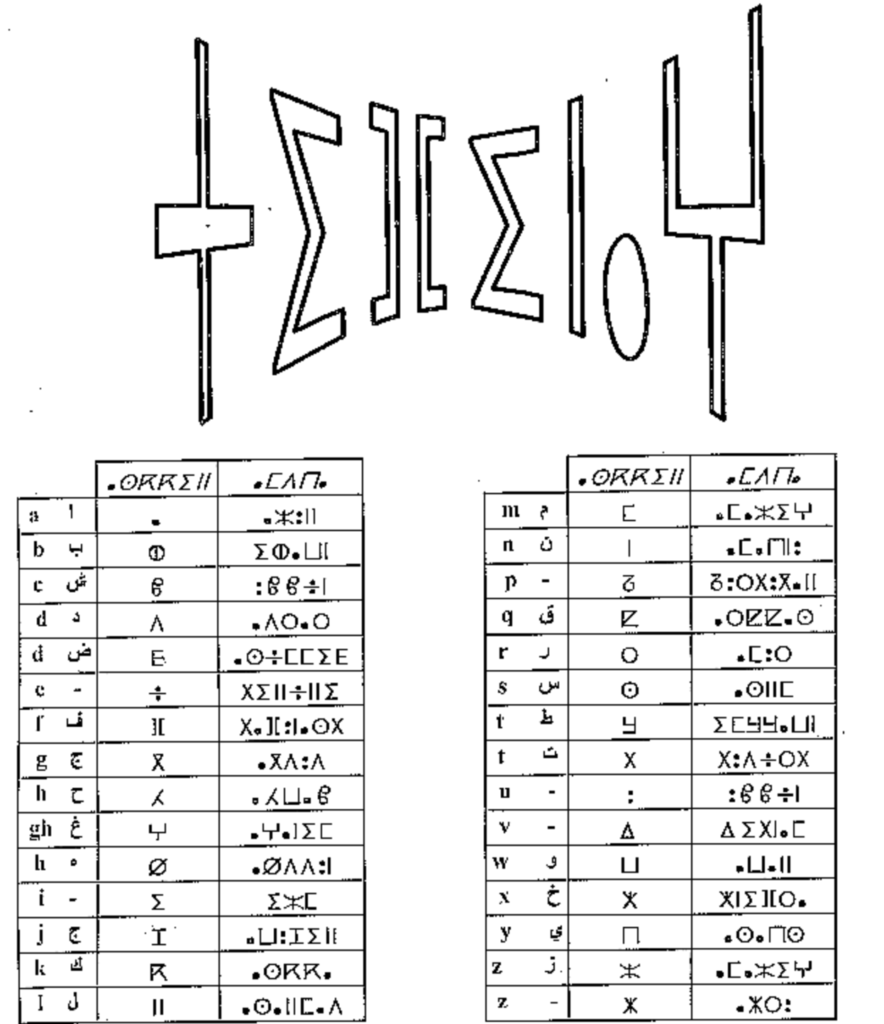
Before written scripts became common, Amazigh people used symbols — engraved on pottery, woven into carpets, and painted on walls — to express their beliefs. Each mark carried meaning:
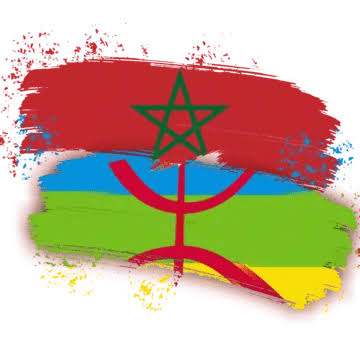
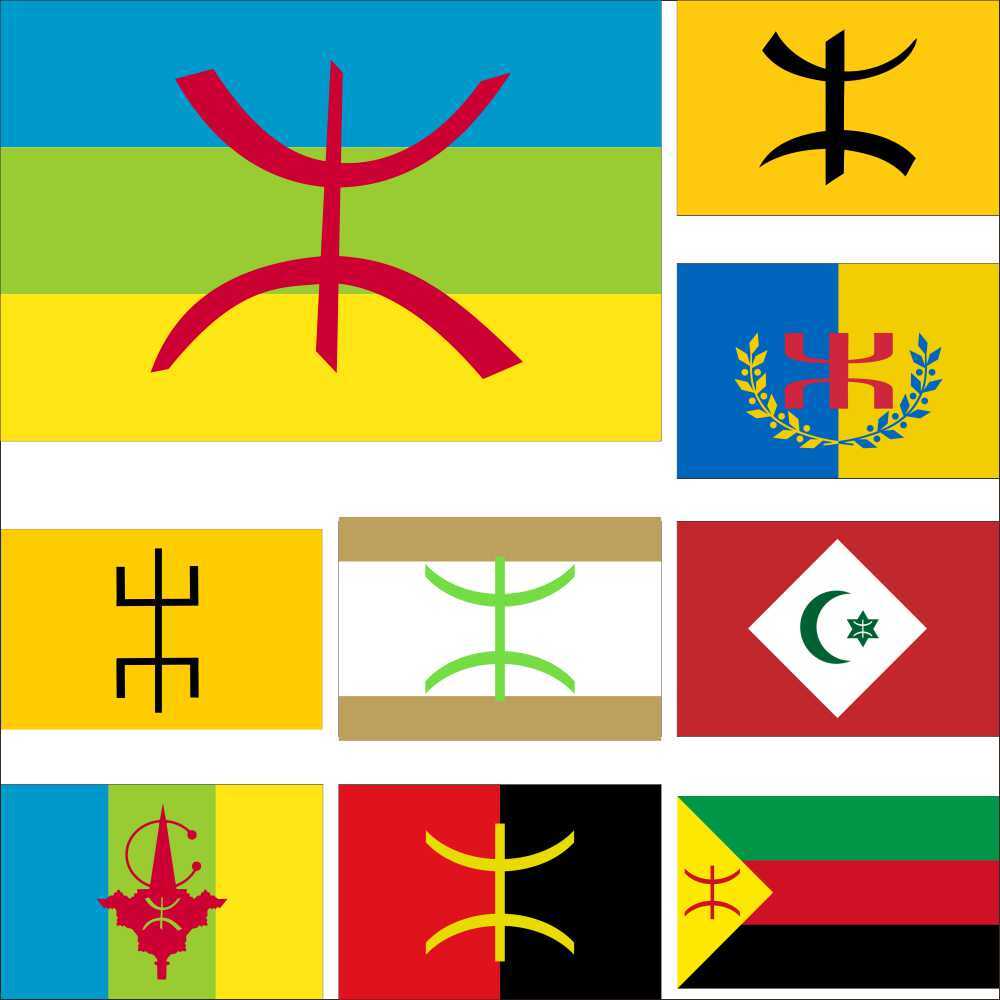
- ⵣ (Yaz or Z) – the symbol of the Amazigh people, representing freedom and life.
- Triangles and diamonds – symbols of femininity, fertility, and protection.
- The eye – a motif to ward off evil.
- Crosses and lines – representing connection between earth, sky, and humanity.
These patterns were not just decorative; they were the Amazigh symbols: language of the ancestors, preserving wisdom and identity through generations.
Where to See Amazigh Symbols in Morocco
1. The Atlas Mountains
In the High Atlas, Amazigh women continue to weave traditional rugs known as hanbel and taznakht. Their geometric patterns are ancient stories told in wool — every color and shape has purpose.
In villages near Taznakht and Ouarzazate, you can visit local cooperatives where artisans proudly explain the meanings behind their designs. Watching them work, you realize that Amazigh art isn’t static — it’s alive, evolving with every stitch.
2. Aït Benhaddou – The Fortress of Symbols
This UNESCO World Heritage site — Aït Benhaddou — is not only famous for its earthen architecture but also for its subtle inscriptions and carvings. Some kasbah walls feature ancient Amazigh marks, preserved by time and desert winds.
Walking through its narrow alleys feels like walking through pages of living history.
3. The Rif Mountains and Northern Villages
In the north, Amazigh communities decorate their homes with painted symbols that reflect harmony, protection, and belonging. The colors — earthy reds, blues, and whites — mirror the natural landscapes of the Rif.
Cultural Insights and Travel Tips
Learn Before You Go
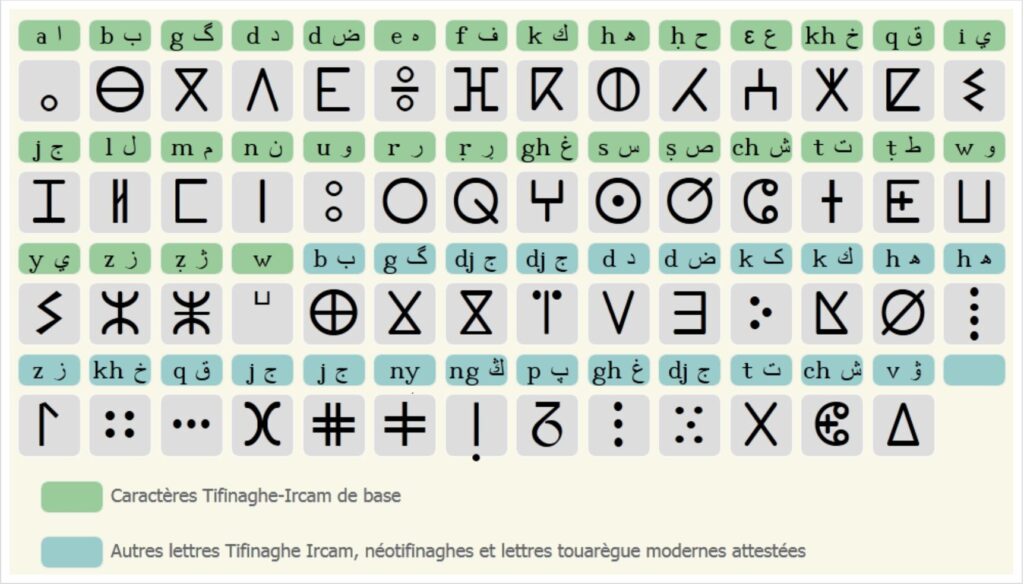
Understanding the Amazigh symbols: language of the ancestors enriches your travels. Before visiting rural areas, learn a few basic phrases in Tamazight — locals deeply appreciate it when visitors show respect for their heritage.
Support Local Artisans
When you buy carpets, jewelry, or ceramics featuring Amazigh patterns, ask about their origin. Purchasing directly from artisans helps sustain traditional craftsmanship.
Join a Workshop
In Marrakech, Fes, or the Atlas Mountains, you can join art workshops that teach Amazigh weaving, calligraphy, and symbolic painting. These experiences allow you to create your own symbolic souvenir while supporting community projects.
Traveler Story: Discovering Meaning in the Mountains
Sophie, a traveler from Canada, recalls her stay in a small Amazigh village near Azilal:
“I thought I was just buying a rug. The woman who made it explained that the diamond shapes represented her daughters, and the lines symbolized their path through life. Suddenly, it wasn’t just fabric — it was her story woven into art.”
This is the power of the Amazigh symbols: language of the ancestors — they transform simple objects into vessels of emotion, belief, and memory.
Preserving an Ancient Language in Modern Morocco
The Amazigh heritage is experiencing a beautiful revival. Since 2011, the Amazigh language (Tamazight) has been recognized as an official language of Morocco, and the ⵣ symbol has become a proud emblem of cultural identity.
Museums in Rabat and Agadir now showcase Amazigh jewelry, textiles, and carvings, while young Moroccan designers are incorporating these ancient patterns into modern fashion and architecture.
Traveling in Morocco today means witnessing how the past and present coexist — where a centuries-old symbol may appear on a modern café sign or a handcrafted bracelet in a souk.
When and Where to Explore Amazigh Heritage
For travelers who want to dive deeper:
- Best Season: Spring (March–May) and Autumn (September–November) offer the best weather for exploring Amazigh villages in the mountains.
- Where to Go:
- Atlas Mountains – weaving cooperatives and pottery workshops.
- Tiznit – renowned for silver Amazigh jewelry.
- Agadir and Tafraoute – home to ancient rock carvings and symbolic art.
- Fes and Marrakech – museums and galleries with Amazigh exhibitions.
Many cultural festivals — such as the Imilchil Marriage Festival — also highlight Amazigh traditions, songs, and symbolic costumes.
FAQ: The Amazigh Symbols and Culture
What do the Amazigh symbols mean?
Amazigh symbols represent protection, nature, fertility, and spirituality. The most famous, ⵣ, symbolizes freedom and human life.
Where can travelers see Amazigh symbols in Morocco?
You can find them on carpets, pottery, tattoos, jewelry, and even building walls, especially in regions like the Atlas Mountains, Tiznit, and Tamegroute.
Are the symbols still used today?
Yes! Amazigh symbols remain a vibrant part of modern Moroccan art, fashion, and identity. Many young artists reinterpret them in new creative ways.
Can tourists learn to make Amazigh crafts?
Absolutely. Many cooperatives offer workshops in weaving, painting, and jewelry-making that teach the meanings of traditional motifs.
Why are the Amazigh called “free people”?
The term “Amazigh” comes from their ancient word for “free man.” It reflects their deep cultural value of independence, community, and connection to nature.
Conclusion: Listening to the Silent Language of Morocco
The next time you wander through Morocco’s souks or mountain villages, look closely at the patterns that decorate carpets, ceramics, or silver bracelets. Those are not random designs — they are messages from the past.
The Amazigh Symbols: Language of the Ancestors speaks of freedom, resilience, and harmony with the land. It reminds every traveler that Morocco’s beauty lies not only in its landscapes but in its symbols — silent yet eloquent, ancient yet alive.
So when you plan your next Moroccan adventure, don’t just look — read the land, its people, and their symbols. You’ll find that every mark tells a story that’s been waiting centuries to be heard.