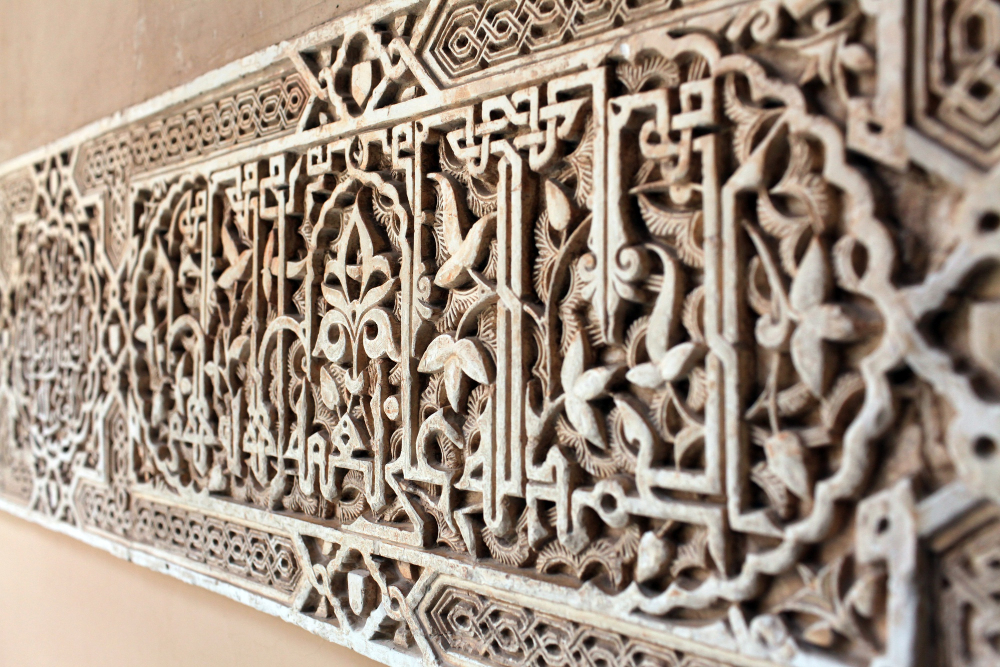
The rhythmic tapping of chisels, the scent of freshly carved cedar, and the sight of delicate patterns taking shape — welcome to The Art of Moroccan Wood Carving, one of Morocco’s most treasured crafts. From the royal palaces of Fez to the historic riads of Marrakesh, wood carving has been a cornerstone of Moroccan architecture and design for centuries.

In this article, we’ll uncover the story behind Morocco’s master woodcarvers, explore where you can witness this artistry up close, and learn how tradition continues to shape modern Moroccan craftsmanship.
The Legacy of Moroccan Wood Carving
Wood carving in Morocco is not just a craft — it’s a language of art and spirituality. Known locally as “Naqqach al-Khashab,” the tradition dates back to the Almoravid and Almohad dynasties, when artisans decorated mosques, madrasas, and palaces with intricate wooden details.
The most common materials used include cedar from the Middle Atlas Mountains, mahogany, and thuya wood — prized for their durability, fragrance, and fine grain.
From the ceilings of the Al-Attarine Madrasa in Fez to the doors of Marrakech’s ancient riads, every carved surface tells a story — of faith, geometry, and Moroccan identity. The artisans, known as Maâlems, pass their skills from generation to generation, preserving not only their craft but also Morocco’s cultural soul.
Where to Discover Moroccan Wood Carving
1. Fez – The Spiritual Heart of Craftsmanship
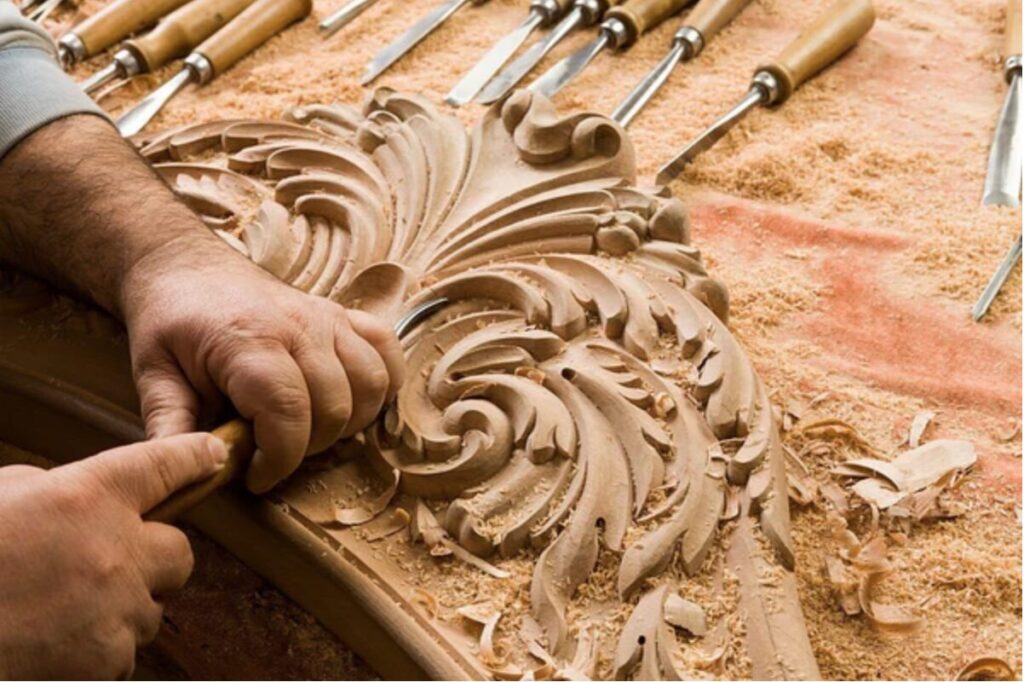
Fez is Morocco’s living museum of craftsmanship. The city’s Medina is home to dozens of artisan workshops where visitors can watch woodcarvers at work. In the Seffarine neighborhood, you can hear the rhythm of chisels echoing through narrow streets as craftsmen carve wooden panels, doors, and furniture with breathtaking precision.
Don’t miss the Bou Inania Madrasa, where carved cedar ceilings and geometric details illustrate Morocco’s deep connection between art and architecture.
2. Marrakesh – Where Tradition Meets Innovation
Marrakesh blends old-world craftsmanship with modern design. In the Souk Chouari, visitors can find a wide range of hand-carved items — from furniture and boxes to ornate lattice screens.
You can also visit the Maison de l’Artisan to learn more about how Morocco is supporting its artisans through workshops and exhibitions that celebrate their skills.
3. Meknes and Rabat – Royal Cities of Refinement
The cities of Meknes and Rabat are also renowned for their woodwork in palaces and mosques. The Dar Jamai Museum in Meknes displays stunning carved ceilings and doors that date back to the 19th century, while Rabat’s royal palaces feature some of the finest examples of Moroccan craftsmanship in a modern setting.
The Process: How Moroccan Wood Carving Comes to Life
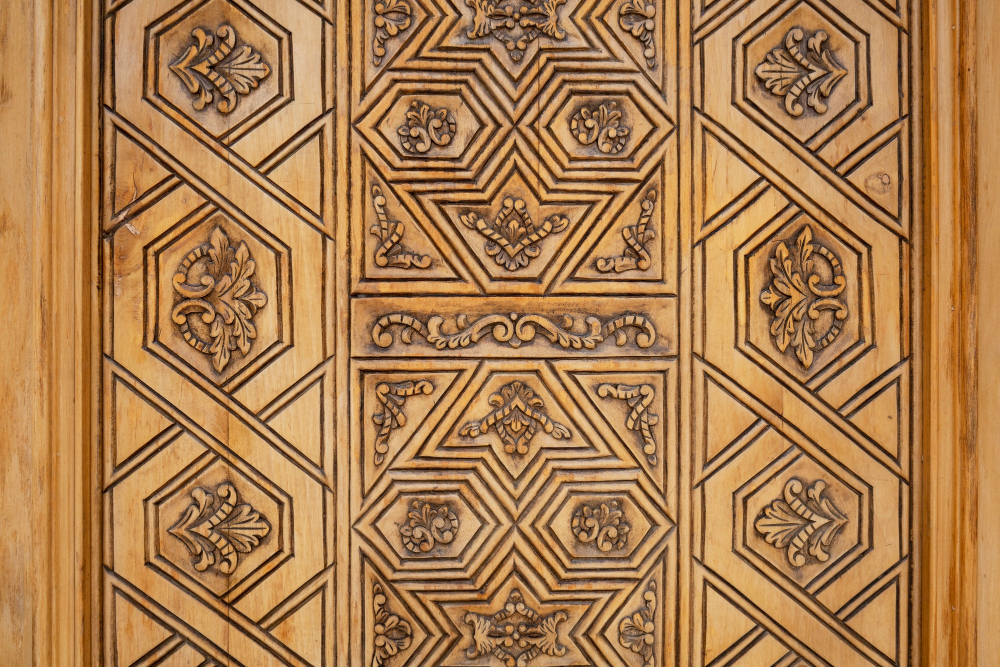
Moroccan wood carving is an art of patience and precision. The process begins with selecting the right wood — usually cedar or thuya. Once the material is seasoned and cut, artisans trace traditional geometric patterns inspired by Islamic art.
Then, using hand tools like chisels and gouges, they carefully remove layers of wood to create depth and texture. Finally, the carved pieces may be painted, gilded, or polished, depending on their intended use.
Each piece — whether a door, ceiling panel, or jewelry box — reflects balance, spirituality, and the beauty of imperfection.
The Symbolism Behind the Patterns
Moroccan wood carving draws heavily from Islamic geometry, Arabesque motifs, and Berber symbols. Every pattern has meaning:
- Stars and polygons represent the unity of creation.
- Floral motifs symbolize growth and life.
- Calligraphy adds a sacred and poetic dimension to the art.
These designs embody Morocco’s history — a crossroads of Arab, Berber, and Andalusian influences — and transform everyday objects into timeless works of beauty.
Travelers’ Experiences: Seeing the Masters at Work
Many travelers describe visiting Moroccan workshops as a magical experience. Watching a Maâlem (master artisan) carve a door or paint a cedar ceiling panel can feel like stepping back in time.
Tourists often visit artisan cooperatives in Fez, Chefchaouen, or Essaouira, where workshops are open to the public. Some even offer short courses, allowing visitors to try their hand at carving or decorating small wooden souvenirs.
Such experiences not only connect travelers with Moroccan culture but also support local artisans — ensuring these traditions continue to thrive.
Bringing a Piece of Morocco Home
For travelers seeking meaningful souvenirs, Moroccan woodwork offers endless options. Hand-carved jewelry boxes, mirror frames, and wall panels are available in most souks and artisan shops.
When purchasing, look for products that carry the “Handmade in Morocco” label or come from certified artisan cooperatives — this ensures quality craftsmanship and supports fair trade.
Shipping options are widely available, and many artisans are now selling their work online, bringing Moroccan artistry to homes around the world.
Future of Moroccan Wood Carving: Tradition Meets Modern Design
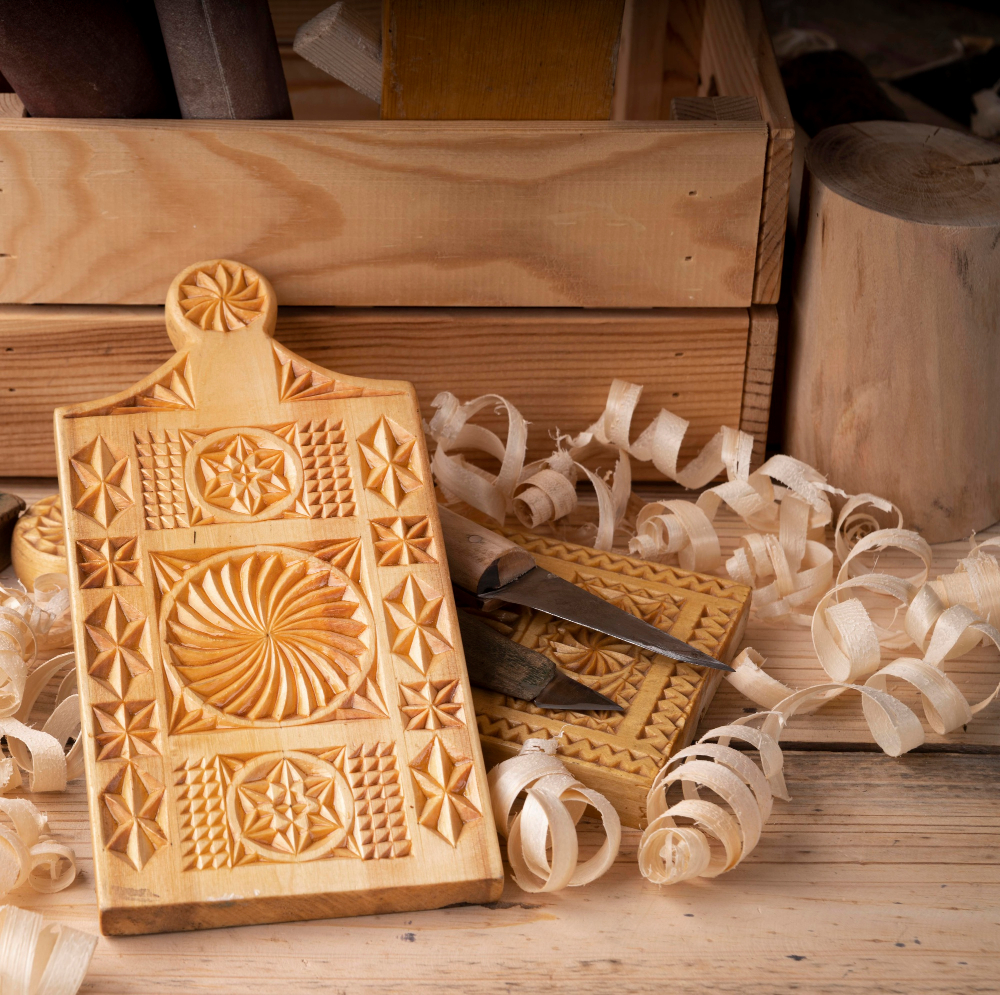
As Morocco modernizes, artisans are finding new ways to keep their traditions alive. Contemporary Moroccan designers are blending wood carving with modern architecture and furniture design.
Boutiques in cities like Marrakesh and Casablanca now feature carved wall panels, lighting fixtures, and home décor that combine ancient techniques with minimalist aesthetics.
Government programs and cultural festivals, such as the Festival of Moroccan Craftsmanship, continue to encourage the preservation and innovation of traditional art forms — ensuring that Moroccan wood carving remains relevant in the 21st century.
FAQ: The Art of Moroccan Wood Carving
What type of wood is most used in Moroccan wood carving?
Cedar wood is the most common material, especially from the Middle Atlas region, valued for its fragrance, strength, and smooth texture.
Can travelers watch woodcarvers at work in Morocco?
Yes! In cities like Fez, Marrakesh, and Essaouira, many artisan workshops are open to visitors, allowing travelers to see the carving process up close.
Are Moroccan wood products handmade?
Absolutely. Most Moroccan woodwork is entirely handmade, with artisans using traditional tools and techniques passed down for generations.
Can I buy Moroccan woodwork online?
Yes, several cooperatives and artisan workshops now sell their handmade wooden products online, with international shipping available.
Is Moroccan wood carving still taught today?
Yes. Many vocational schools and artisan cooperatives train new generations of woodcarvers to preserve Morocco’s heritage and sustain local communities.
Conclusion: Carving a Timeless Legacy
The Art of Moroccan Wood Carving is a living expression of Morocco’s soul — a blend of beauty, spirituality, and craftsmanship. From Fez’s medinas to Marrakesh’s bustling souks, this ancient tradition continues to enchant travelers from around the world.
Whether you admire a carved cedar door, a decorative ceiling, or a simple wooden box, you are witnessing centuries of artistry shaped by hand and heart.
So on your next visit to Morocco, take a moment to look beyond the surface — and discover the stories carved within the wood.